Railroad Tie Retaining Wall Repair Services in Oxnard, CA
Railroad Tie Retaining Wall Repair Kings provides railroad tie retaining wall repair, rotted tie replacement, and leaning timber wall straightening services in the Oxnard, CA area for both residential and commercial properties, from low garden borders to driveway walls. Contact us now for a free estimate.
How Much Does Railroad Tie Retaining Wall Repair Cost in Oxnard, CA?
Railroad tie retaining wall repair in Oxnard, CA costs anywhere from $270 to $1,640 on average for replacing a few rotted ties or re-anchoring a short leaning section. The price depends on how many ties need replacing, whether they sit at the top or near the bottom, the wall height, digging out soil for drainage or tiebacks, access, and disposal of the old ties.
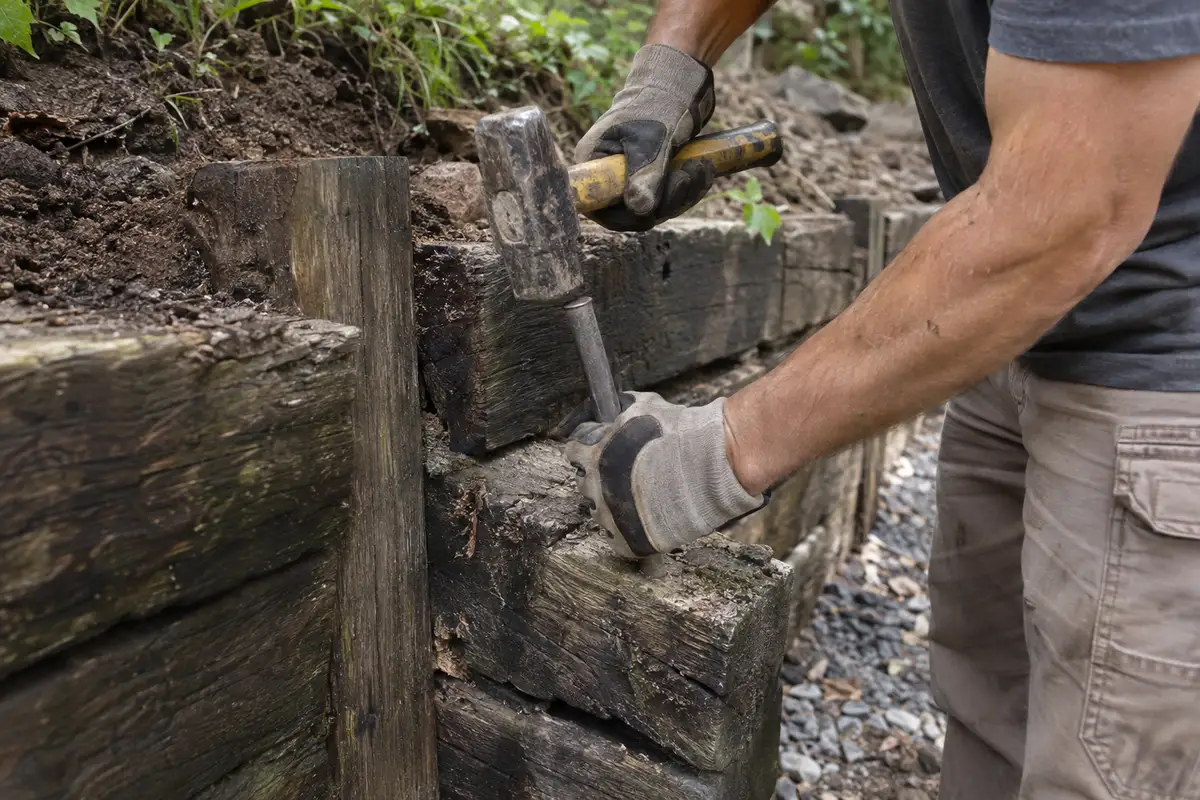
Do You Repair Railroad Tie Walls at Homes and Businesses?
Yes, we repair railroad tie and timber retaining walls at houses, rental properties, HOA common areas, and commercial lots. Let us know the property type and roughly how long and tall the wall is.
Do You Service My Area?
Yes, we cover the Oxnard, CA area. Send us the property address and we'll confirm.
Can You Replace Just a Few Rotted Ties Without Rebuilding the Whole Wall?
Yes, if the rest of the wall is sound. Top-course ties usually rot first and are the simplest to swap, while a rotted tie near the bottom means we support everything above it, which costs more.
Can You Fix a Railroad Tie Wall That Is Leaning Forward?
Yes, in many cases. We dig out behind the wall, pull it back toward the bank, and anchor it with tiebacks and drainage. If most of the ties are soft, rebuilding is the better fix.
Can You Fix a Bulge in the Middle of the Wall?
Yes, in most cases. A bulge usually means water pressure or missing tiebacks, so we relieve the soil behind it and anchor that section back into the bank.
When Should a Railroad Tie Wall Be Replaced Instead of Repaired?
We repair when the rot is limited to a few ties and the wall stands mostly straight. If ties crumble when you push a screwdriver in or the whole run is bowed, we usually recommend replacement.
How Long Does a Railroad Tie Retaining Wall Last?
Most railroad tie walls last about 20 years. Creosote slows rot but doesn't stop it, and walls built with poor used ties can fail in 5 to 10.
Why Is My Railroad Tie Wall Failing?
Most tie walls we see fail from rot, water pressure behind the wall, or missing tiebacks. Many were stacked on bare soil with no gravel behind them, so water stays trapped against the wood.
Is a Leaning Railroad Tie Wall Dangerous?
Yes, it can be. Ties are heavy and the soil behind them is heavier, so keep children, cars, and foot traffic away from a wall that is moving. Tell us if it holds up a driveway, path, or foundation.
How Soon Can You Look at My Wall?
We can usually look at a wall within a few days. A wall that is actively moving or has partly fallen gets moved up, so tell us if it is changing.
What Information Do You Need for a Repair Quote?
We need the address, photos of the whole wall and the damaged ties, its approximate height and length, and what sits above it. Mention any driveway, fence, trees, or sprinklers close to the wall.
Will I Need to Be Home During the Repair?
No, as long as we can reach the wall and you've approved the scope. Unlock any gates and point out sprinkler lines or buried lighting before we start.
Can I Request a Repair if I Am Renting the Property?
Yes, but the landlord or property manager has to approve the work first.
Can You Repair a Wall That Sits on the Property Line?
Yes, but both owners should agree to the work before we start, since the wall may be shared. Tell us who owns which side and whether your neighbor is splitting the cost.
Do I Need a Permit to Repair a Railroad Tie Retaining Wall?
No, usually not for replacing a few ties on a low wall. Rebuilding a wall over about 4 feet, or one holding up a driveway, often needs a permit and sometimes an engineer. Your local building department decides, and we can tell you what's usually required.
Can I Get a Price Before the Work Begins?
Yes, we confirm the price before starting. If digging shows more rotted ties or a bigger drainage problem than we expected, we talk to you before doing any extra work.
Does Homeowners Insurance Cover Railroad Tie Wall Repair?
No, not usually for rot, age, or slow leaning, which policies treat as wear. Sudden damage like a vehicle or fallen tree may be covered, and we can give you photos and an invoice for the claim.
How Long Does a Railroad Tie Wall Repair Take?
Replacing a few ties usually takes one day. Straightening a leaning section with new tiebacks and drainage typically takes two to three days, and a full rebuild longer.
Can You Repair Ties That Are Separating at the Corners?
Yes, we pull the corner back together and pin it with long spikes or rebar driven through the ties. If the corner ties are rotted, we replace them first.
Can You Repair a Railroad Tie Wall Along a Driveway?
Yes, but driveway walls carry vehicle weight, so they often need stronger anchoring and sometimes an engineer's input. Tell us how close cars park to the edge.
Can You Repair a Tall Railroad Tie Wall?
Yes, but walls over about 4 feet face much more soil pressure, and repairs often need an engineer's plan. Terracing into two shorter walls is sometimes the better answer.
Can You Repair Railroad Tie Steps in a Slope?
Yes, we replace rotted or loose tie steps and pin them back into the slope.
Can You Repair Railroad Tie Garden Bed Walls?
Yes, low raised bed and terrace borders are quick repairs. If you grow food in the bed, we'd suggest replacing old creosote ties with new treated or untreated timber.
Can You Repair a Railroad Tie Wall That Has Partly Collapsed?
Yes, we clear the fallen ties and soil, then rebuild that section with proper drainage and tiebacks. Keep people away from the collapse and the bank above it until we get there.
Can You Repair a Wall After Heavy Rain Washed Out Soil Behind It?
Yes, we refill the washout with gravel, add drainage so water stops pooling there, and fix any ties that shifted. Tell us where the water comes from, like a downspout or the slope above.
Can You Repair a Wall With Termites or Carpenter Ants in the Ties?
Yes, we cut out the infested ties and replace them. If termites are active, have a pest control company treat the area too, since they can move on to other wood nearby.
Can You Repair a Wall That Tree Roots Are Pushing Over?
Yes, but roots will keep pushing unless they are cut back or the wall moves. We check whether a root can be cut without harming the tree before we straighten the wall.
Should I Clear Plants Off the Wall Before You Arrive?
Yes, if there are plants you want to keep. Dig them out from the top of the wall and from the area behind it that we'll be digging.
Do I Need to Call 811 Before You Dig Behind the Wall?
No, we request the 811 locate ourselves before digging for tiebacks or drainage. It doesn't mark private lines like sprinklers or landscape lighting, so point those out.
Can You Repair the Wall When the Ground Is Wet or Frozen?
No, not usually. Saturated soil can slump while the wall is opened up, and frozen ground can't be dug or compacted, so we wait for the soil to drain or thaw.
Do You Add Drainage Behind a Railroad Tie Wall?
Yes, when we open up the back of the wall. We place gravel behind it with filter fabric and a perforated drain pipe where water needs to leave, so the soil stops pushing on the ties.
What Are Deadmen and Does My Wall Need Them?
Deadmen are T-shaped tiebacks that run about 3 feet back into the bank and lock the wall to the soil. Many older tie walls were built without them, and we add them when we straighten a leaning section.
Will You Use New Railroad Ties for the Repair?
No, creosote ties aren't approved for new residential use, and some towns bar repairing with them. We use ground-contact treated landscape timbers sized close to your existing ties.
Will the New Timbers Match the Old Ties?
No, not exactly. New treated timbers are usually lighter in color and can be a slightly different size than old ties, so the repaired section will stand out at first.
Are Old Railroad Ties Dangerous to Handle?
Yes, creosote can irritate skin, so we wear gloves and long sleeves when handling old ties. Don't sit on the wall often or let children play on it, and never burn old ties.
Can I Repair a Railroad Tie Wall Myself?
Yes, on a low wall under about 3 feet that isn't holding soil near the house. We'd handle taller walls, bottom ties, and leaning sections, since the wall has to be braced while ties come out.
Can You Replace My Railroad Tie Wall With Concrete Block?
Yes, we can remove the ties and build a segmental block wall in their place. Block costs more upfront, but it doesn't rot or attract insects the way old ties do.
What Do You Do With the Old Railroad Ties?
We haul them away and dispose of them according to local rules. Household creosote wood can usually go out with regular trash, but some areas require a specific drop-off.
